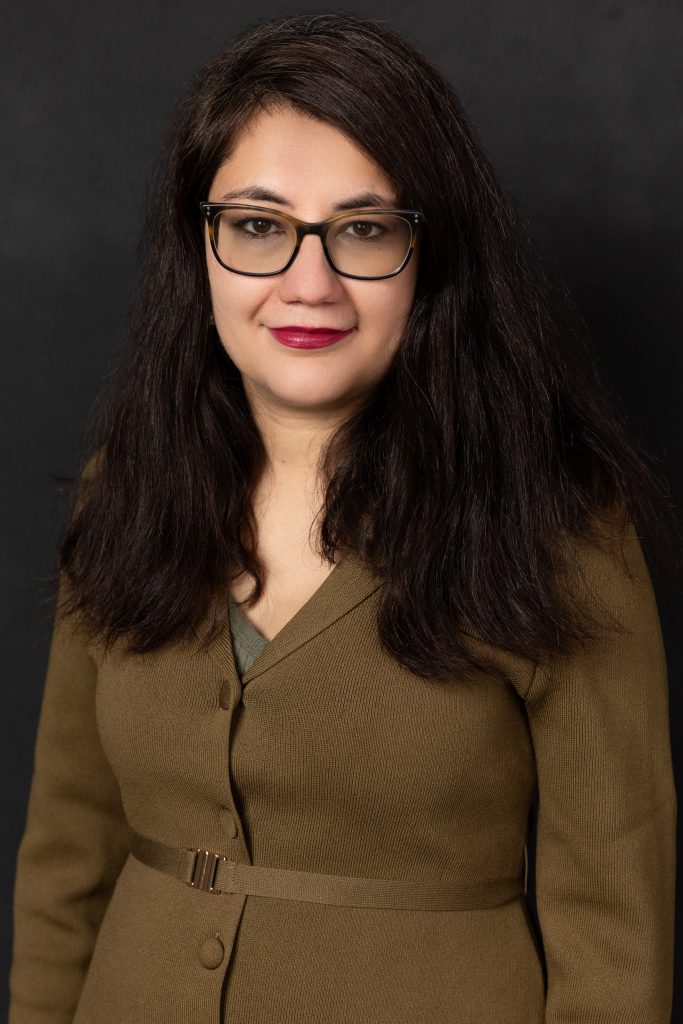
Dr. Nasim Fatemighomi
Research Scientist
Nasim completed her undergraduate degree in physics in Iran before moving to the University of Manchester, where she earned a master’s degree in collider physics, working on the DØ (DZero) experiment at Fermilab. During her master’s studies, she developed a strong interest in the search for neutrinoless double-beta decay, which inspired a transition into underground physics. She pursued her PhD at Manchester with the NEMO-3 experiment, located at the Modane Underground Laboratory in France.
In 2009, Nasim accepted a postdoctoral position with the SNO+ experiment at Queen’s University, which brought her to Canada and to SNOLAB. As an early SNO+ collaborator, she frequently travelled to site and contributed to the initial stages of detector construction. She later joined the DEAP-3600 experiment as a UK collaborator through Royal Holloway, University of London, spending much of her time at SNOLAB on detector construction and commissioning. In 2017, she briefly worked with TRIUMF on DEAP-3600 before moving into her current position at SNOLAB.
Since 2018, Nasim has been based at SNOLAB as a collaborator on the SNO+, DEAP-3600, and nEXO experiments. Her work with SNO+ focuses on radon background mitigation — a critical challenge for neutrino less double-beta decay searches. For DEAP-3600, she contributed to detector upgrades, and for nEXO, she designed a conceptual automated system for radon measurements. In addition, she collaborates with SNOLAB’s Low-Background group to develop advanced radon assay systems.
“My day-to-day work can be quite varied. One day, I might be underground working on one of the radon systems or performing R&D in the surface clean lab. Another day, I might be in front of my computer analyzing data or writing procedures and documentation. I also spend a significant amount of time mentoring and talking with SNOLAB physics students.”
“I am proud to have contributed to the construction, calibration, and data analysis of the SNO+ and DEAP-3600 experiments, two major neutrino and dark matter projects at SNOLAB. I am especially proud to be one of the key people at SNOLAB working on low-background science techniques.”
“To make exciting physics discoveries possible, you first need to eliminate anything that could mimic the signal you’re looking for. At SNOLAB, that means building experiments from materials with extremely low levels of natural radioactivity. Finding such materials is much more challenging than one might think and often requires developing innovative purification techniques. This process involves close collaboration with scientists, engineers, and technologists—so teamwork is absolutely essential!”
Nasim.Fatemighomi@snolab.ca