The search for dark matter at SNOLAB
October 30, 2026
— Astrophysics News
There is far more to our universe than meets the eye. Everything we can see, from stars and planets to people and plants, makes up only a small portion of the known universe. So, what about the rest?
The mystery around us
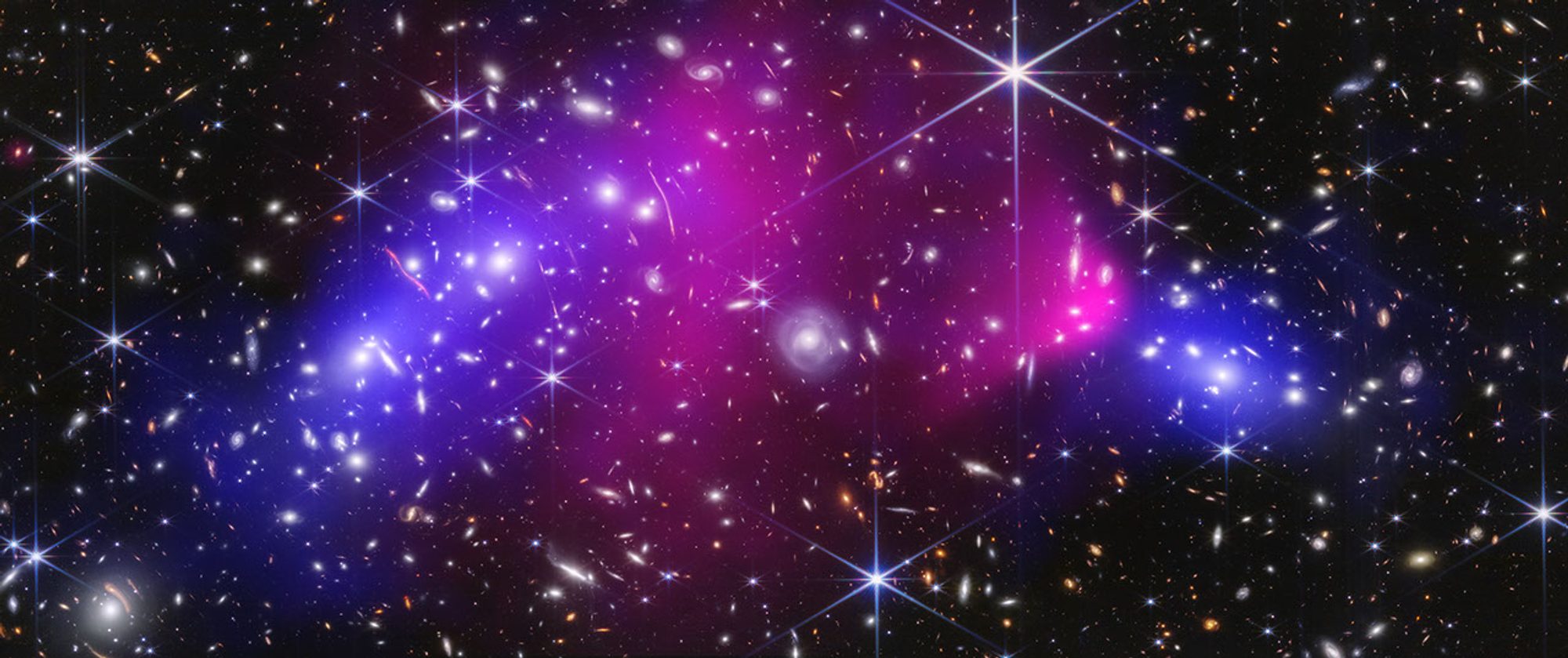
Astronomers and astrophysicists estimate that more than 25 percent of the universe is made up of dark matter, an invisible substance that does not emit, absorb, or reflect light. Although we cannot see it directly, scientists know it exists because of the gravitational effects it has on galaxies and other large-scale structures in the universe. Understanding dark matter will help us better understand how the universe formed and evolved.
Over the last century, astronomers have discovered that large objects in our universe move too fast. Galaxies spin too quickly. Stars at their edges should have flown off into space, yet they have remained bound together as if held there by unseen matter. Other observations showed light bending as if influenced by invisible mass. Together, these and many other clues pointed to the existence of dark matter, a form of matter that interacts through gravity but not light. Today, scientists estimate that about 85% of the universe’s matter is dark matter. Because it cannot be observed using conventional astronomical tools, detecting it is extremely challenging.
A global effort
Experiments around the world continue to search for dark matter, yet this universal substance remains a mystery. Researchers use a variety of techniques to look for evidence of dark matter interactions, from studying the cosmos to searching for signals in highly sensitive detectors deep underground.
Searches underway at SNOLAB
Located two kilometres underground, SNOLAB provides an ultra-clean, low-background environment where scientists can search for the faint signals that may reveal the nature of dark matter. Here, direct detection experiments are designed to search for interactions between dark matter particles and ordinary matter in the target material of detectors.
PICO-40L and PICO-500
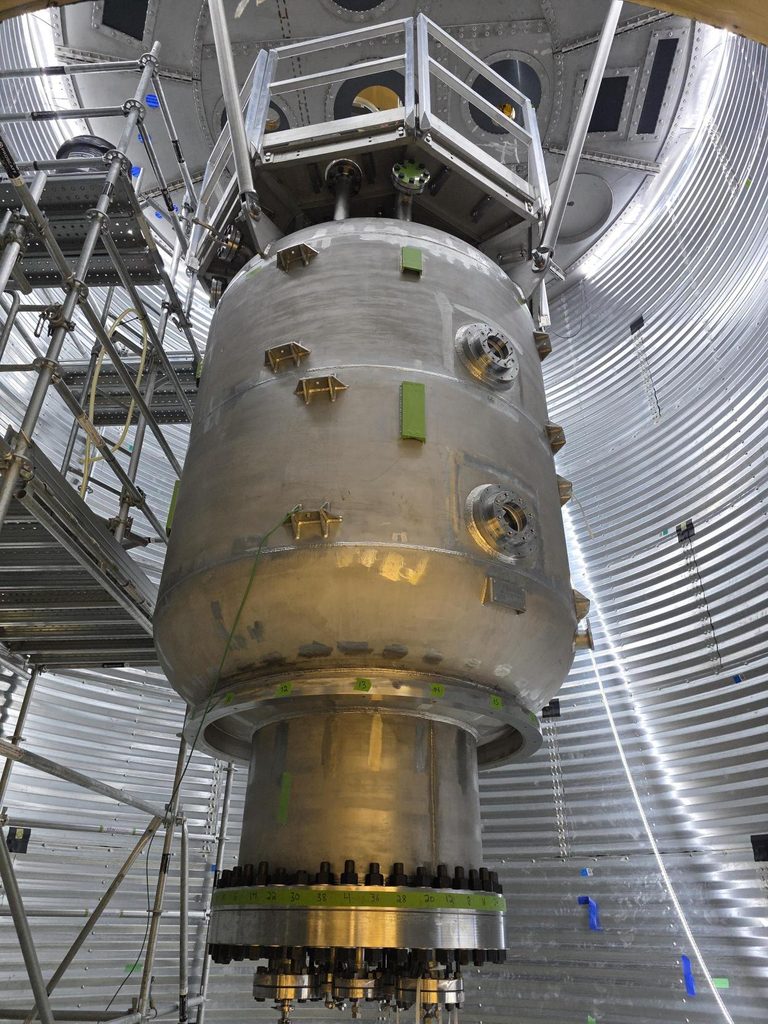
PICO uses a bubble chamber to look for dark matter. The fluid in the bubble chamber is superheated, so when a particle interacts, it boils and creates a bubble. This bubble is captured by cameras and microphones. Studying these details of the bubble can tell scientists about the particle that caused it. PICO is advancing its search for dark matter through continued work on PICO-40L and the construction of the larger PICO-500 experiment at SNOLAB. Recent milestones in detector preparation and installation have brought PICO-500 closer to beginning operations and opening new opportunities to explore the nature of dark matter. Read more about PICO in this article from Queen’s University.
SuperCDMS (Super Cryogenic Dark Matter Search)
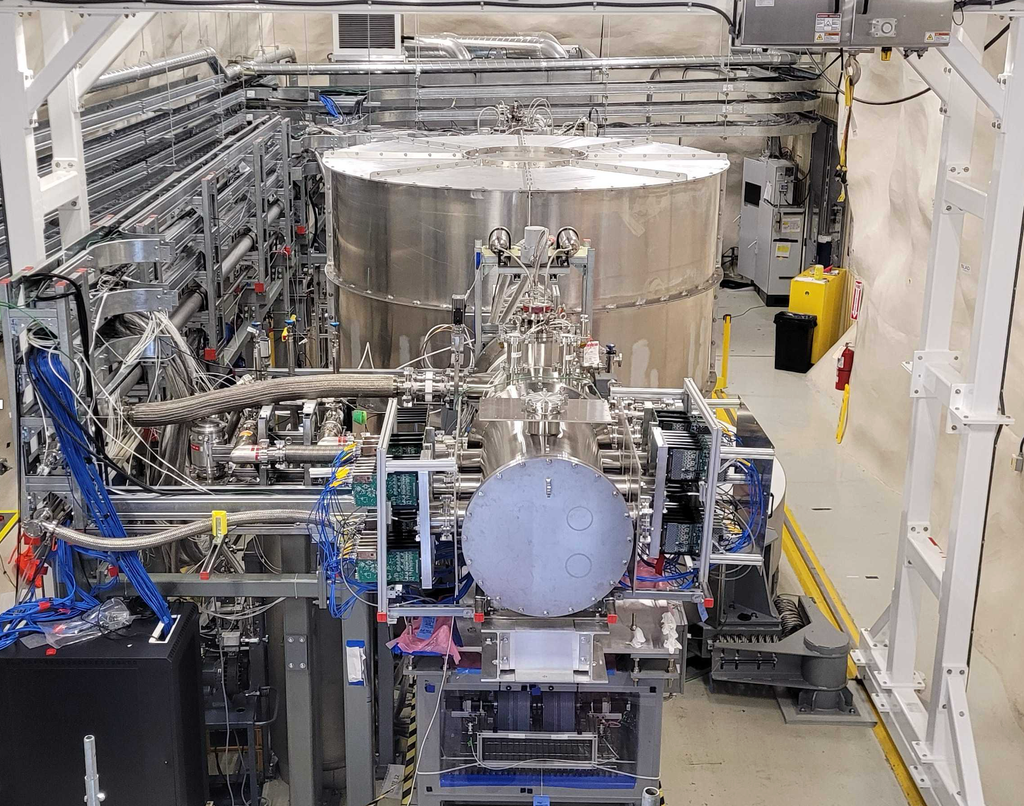
SuperCDMS uses silicon and germanium crystals to detect dark matter. The crystals are operated at temperatures colder than outer space, reducing noise and allowing researchers to measure the tiny amounts of energy deposited when a particle interacts with the detector.
SuperCDMS has cooled the experiment to the extremely low temperatures needed for its detectors to operate. Preparation and testing of their systems are underway as the experiment advances towards the search for dark matter. See this news release from SLAC National Accelerator Laboratory for a recent update.
DEAP-3600 (Dark Matter Experiment using Argon Pulse-shape discrimination)
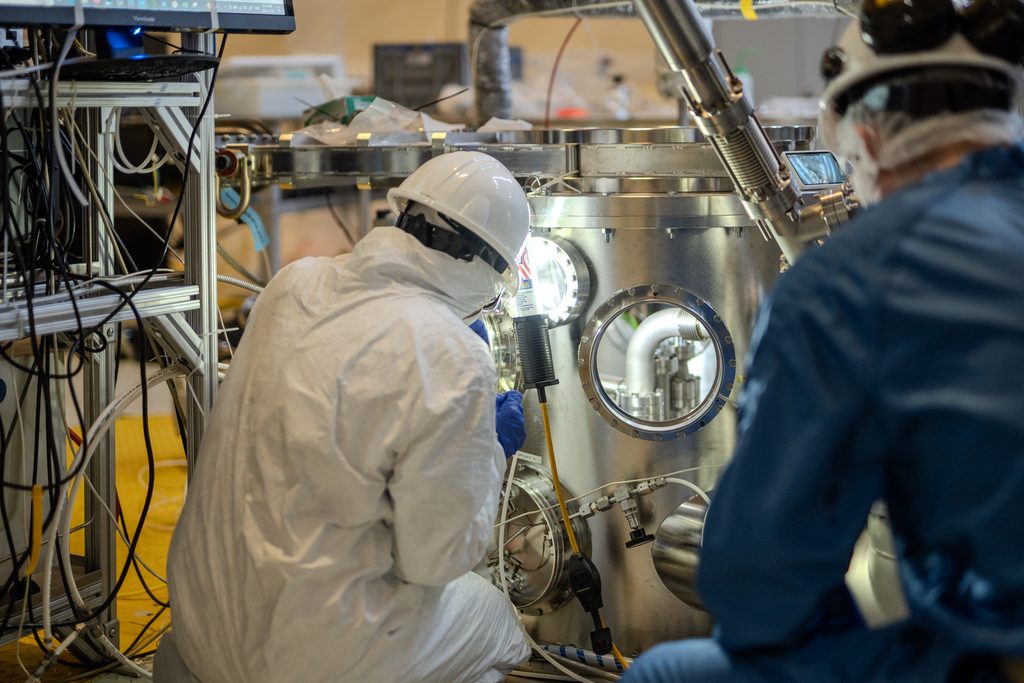
DEAP-3600 uses 3,600 kilograms of liquid argon to search for dark matter. When argon atoms are excited by particle interactions, they produce ultraviolet light. Sensors surrounding the detector capture this light, and researchers analyze its characteristics to determine what caused the event.
DEAP –3600 completed major upgrades to improve the detector’s sensitivity and strengthen its search for dark matter. The experiment is now entering a new phase of low-background operations, while researchers continue to explore new areas of dark matter science and publish results that will help guide the design of future detectors.
NEWS-G (New Experiments With Spheres – Gas)
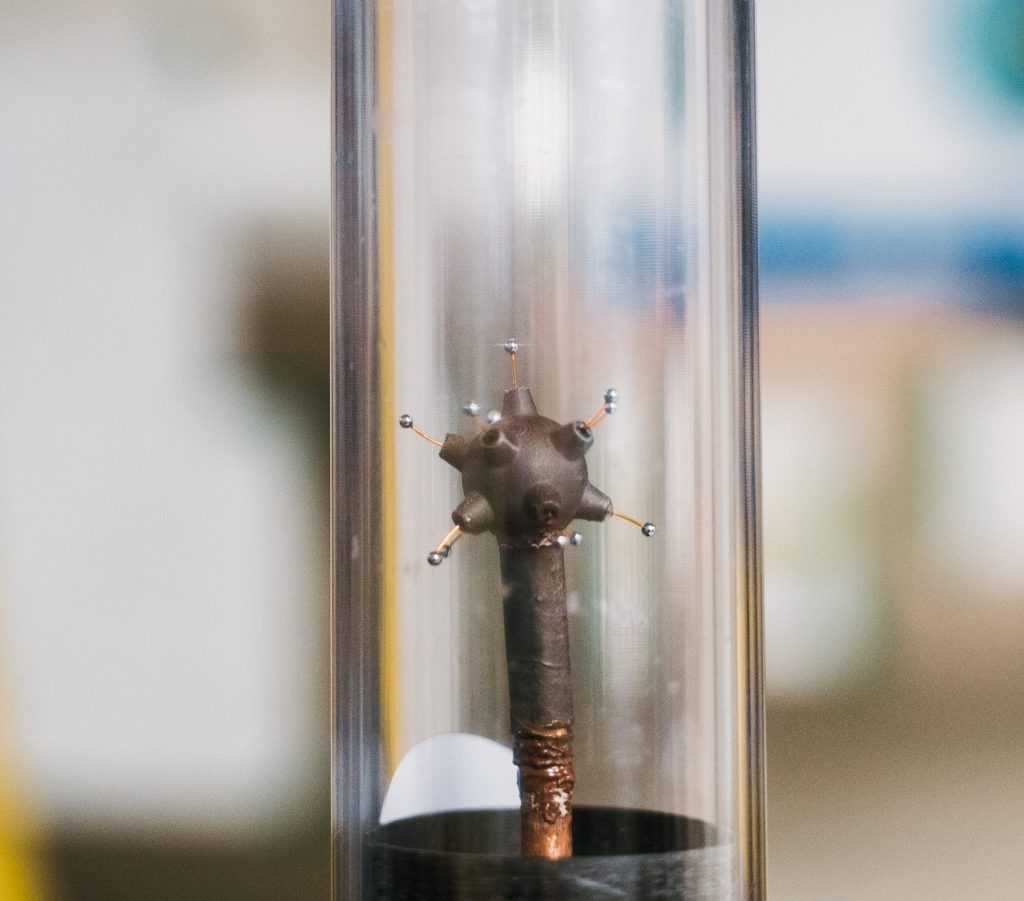
NEWS-G uses a large spherical copper vessel filled with gas to search for dark matter. When a particle enters the sphere, it ionizes some of the gas, generating electrons. An ACHINOS sensor at the centre of the sphere attracts the electrons using a high voltage, producing a signal that can be measured and analyzed.
NEWS-G completed upgrades to improve detector performance and support future dark matter searches. The team is now preparing for new data collection while continuing to develop technologies and analysis methods that will strengthen the experiment’s scientific reach.
SENSEI (Sub-Electron Noise Skipper Experimental Instrument)
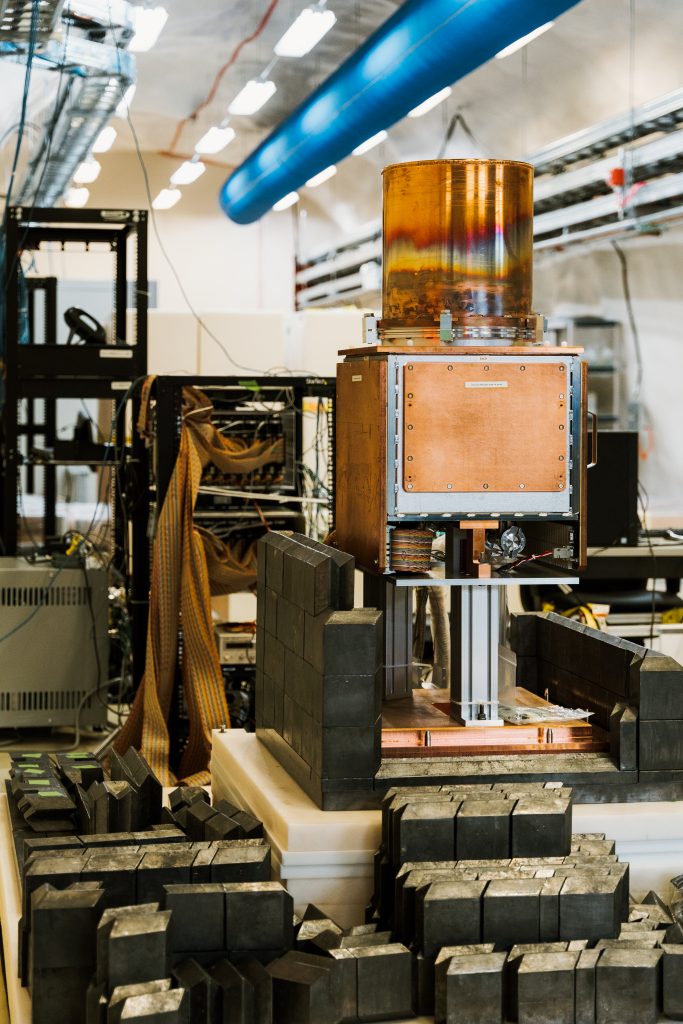
SENSEI uses ultra-low-noise Charge-Coupled Device (CCD) sensors to search for dark matter. When a particle interacts with the CCD, it can cause electrons to recoil. By counting individual electrons within millions of pixels, SENSEI can make extraordinarily precise measurements while maintaining extremely low background noise. The SENSEI experiment has been taking science data since the summer of 2025 and is producing world-leading results in low mass dark matter searches.
A day for dark matter
Dark Matter Day is an international public engagement initiative that aims to shed some light on the mystery of dark matter. Building on the idea of dark matter as the “ghost of the universe,” celebrations take place around Halloween each year, bringing scientists and the public together to explore one of the biggest unanswered questions in physics.
As researchers continue their search for dark matter beneath the Canadian Shield and around the world, Dark Matter Day provides an opportunity to share this scientific journey with audiences of all ages and celebrate the discoveries still waiting to be made.